
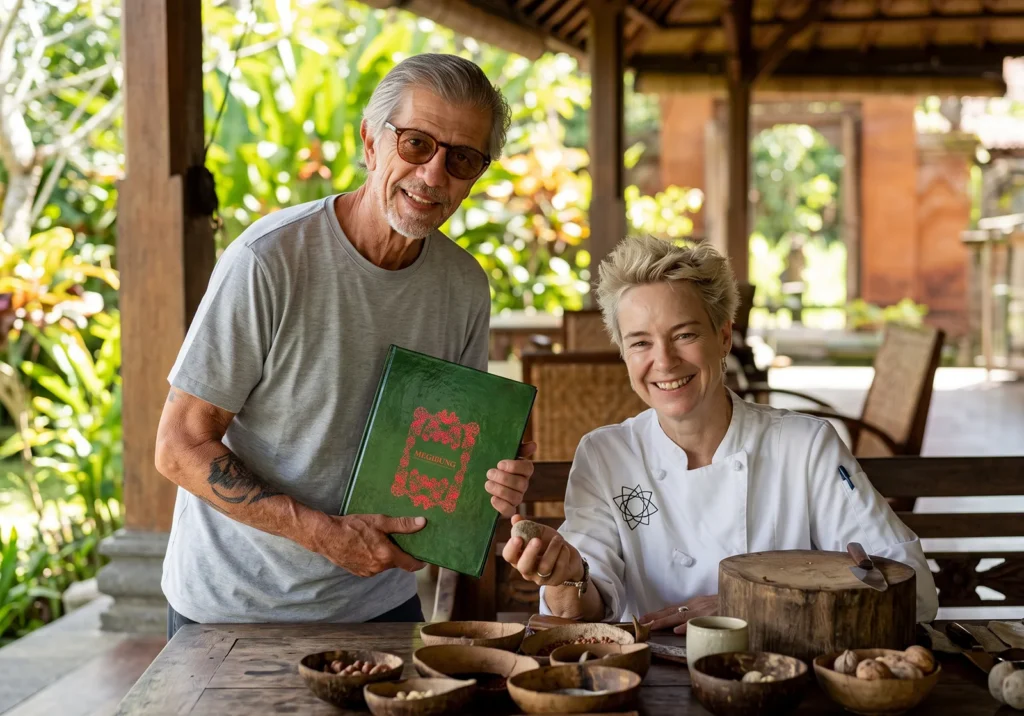
Professional Lens With Chef Heinz Von Holzen and Penelope Williams.
What is it like to run an F&B business in Bali? We asked chef-owners to share their insights.
Q: “What has been the most challenging moment in your journey running or managing an F&B business in Bali?“
Heinz: Running an F&B business in Bali is both a privilege and a serious responsibility. The island offers extraordinary opportunities, from world- class tourism and a vibrant culinary scene to a rich cultural foundation.
However, the industry is highly competitive and demanding. Statistics show that 60% of restaurants close within their first year, and nearly 80% do not survive beyond five years.
Passion alone is not enough.
A restaurant requires consistent quality, strong financial management, disciplined operations, well-trained staff, and a clear identity.
Bali’s market is dynamic. Trends change quickly.
Guests are well traveled and informed. Costs continue to rise. Expectations are high.
Penelope: Running a business in Bali means to me that I am also part of a huge community. My staff is like a family, the village that Bali Asli is part of, and the people living around Bali Asli, too. We are all part of a community, supporting each other. I feel very blessed to be part of this culture where the ethics are very much “ all for one and one for all”!
Q: “How important is community in your journey as a professional Chef and business owner in Bali?“
Heinz: In Bali, community is everything. A restaurant never operates in isolation. It is part of a larger ecosystem that includes the local banjar, village, suppliers, farmers, fishermen, and the wider tourism network.
Being part of this community means contributing, supporting local initiatives, and respecting the rhythm of Balinese life. When we operate with respect, we are welcomed not just as business owners but as members of the community. For us, success comes not only from what we take, but from what we give back. We support local suppliers, promote Balinese culture, and actively engage in industry discussions. A strong hospitality sector depends on collaboration. When challenges arise, we must stand together by sharing knowledge, supporting one another, and maintaining open communication. Community is not a concept. It is a daily practice built on relationships that carry us through good and difficult times.
Penelope: Nothing in Bali is possible without community. It is number one. It is an essential network between people that has been lost in the first world. I was helping my security guard and his family, and their family harvest rice the other day, some people were cutting the rice, some knocking of the heads of rice and others taking the sticks of rice to use a food and bedding for their animals, then the rice was laid out to dry and another person’s garden, then it was taken to some one down the road to mill it. No money passed hands. Payment was made in kind, whether it was a percentage of the harvested rice or by helping others with their rice later on. This is a community.
Q: “How do you stand out from the crowd? What makes your guests return time and again?”
Heinz: Our philosophy is embedded in our company credo – a living document consisting of 20 guiding principles that every team member understands and “owns.” Each day, we discuss one of these principles: warm welcome, anticipating guest needs, telephone etiquette, attention to detail, and many more. At the heart of our philosophy lies authenticity. We are committed to preserving and promoting traditional Balinese cuisine and culture. Despite modernization and global influences, we make a conscious effort not to westernize our recipes. Our mission is to present Balinese food as it truly is – rich in heritage, flavor, and meaning.
Penelope: Bali Asli’s philosophy is in our name. “ASLI” real, true, tradition, authentic. Bali Asli is the bridge between the Real Balinese culture and cuisine and visitors to Bali. We bring guests to experience the real Bali, unexploited and in context.
Q: “What has helped you stay resilient and keep your business moving forward during challenging times?”
Heinz: The honest answer is simple: success – and belief. Over the past 30 years, since opening Bumbu Bali, we’ve faced many challenges, from economic crises to changing tourism patterns and difficult seasons. Yet we’ve always believed in the good karma of Bali: if you do good, good will return to you.
Resilience in hospitality requires a positive mindset. Guests come to Bali seeking warmth and light, and it’s our responsibility to create that environment. We focus on opportunities, continue investing in our team, and maintain our standards even in challenging times.
Success is not only measured financially, but in loyal returning guests, long-term team members, and the reputation built over decades. Belief, consistency, and optimism have carried us through every storm—and continue to guide us forward.
Penelope: My team helps me keep going. We make all the business decisions together. When I started to lose faith in Bali Asli’s ethos and started to change our concept, degrading what we had worked for for 15 years. My team sat me down and asked me, “If I have stopped believing in them? Why had I started losing faith in Bali Asli? “They brought me back and together we are now stronger than ever.
Q: “What kind of support or community do you think the F&B industry in Bali needs today?”
Heinz: Looking at Bali’s hospitality future, one thing is clear: we must strengthen our foundation at the grassroots level. Hospitality schools play a crucial role. We need a stronger focus on Balinese and Indonesian culture, local products, traditional cuisine, and the pride that comes with representing one of the world’s most admired destinations. Bali offers world-class hospitality, world-class culture, and world-class food. Our education system should reflect that. Young professionals should see opportunities here at home – not only abroad. While international experience can be valuable, we must also create attractive, sustainable career paths within Bali. The future of our industry depends on well-trained, motivated local talent who are proud ambassadors of their heritage.
Penelope: The government needs to give space, time, and priority to Balinese culture and the cuisine. Without this, Hospitality in Bali will be dead. Education, funding, and realistic, clear policies are needed to govern and manage the entire island’s rubbish management.
Heinz Von Holzen
Chef and Owner Art Cafe Bumbu Bali
Penelope Williams
Chef and Owner Bali Asli Restaurant


